

| Structure Breeds | |||
The JacobinThe Jacobin is one of many very old domestic pigeon breeds. Undisputed knowledge
of its origin simply does not exist. Some accounts place the origin of the
breed in India, while others say Cyprus. What can be established is that
by the 16th century, Jacobins had arrived in Europe to stay The Jacobin received its European name because of the hood of feathers enveloping
the back and both sides of its head. This hood resembles the cap on garments
worn by the Jacobin order of monks. For others, Jacobins bring back memories,
not of monks, but rather of women with feathery boas draped about their necks |
 |
||
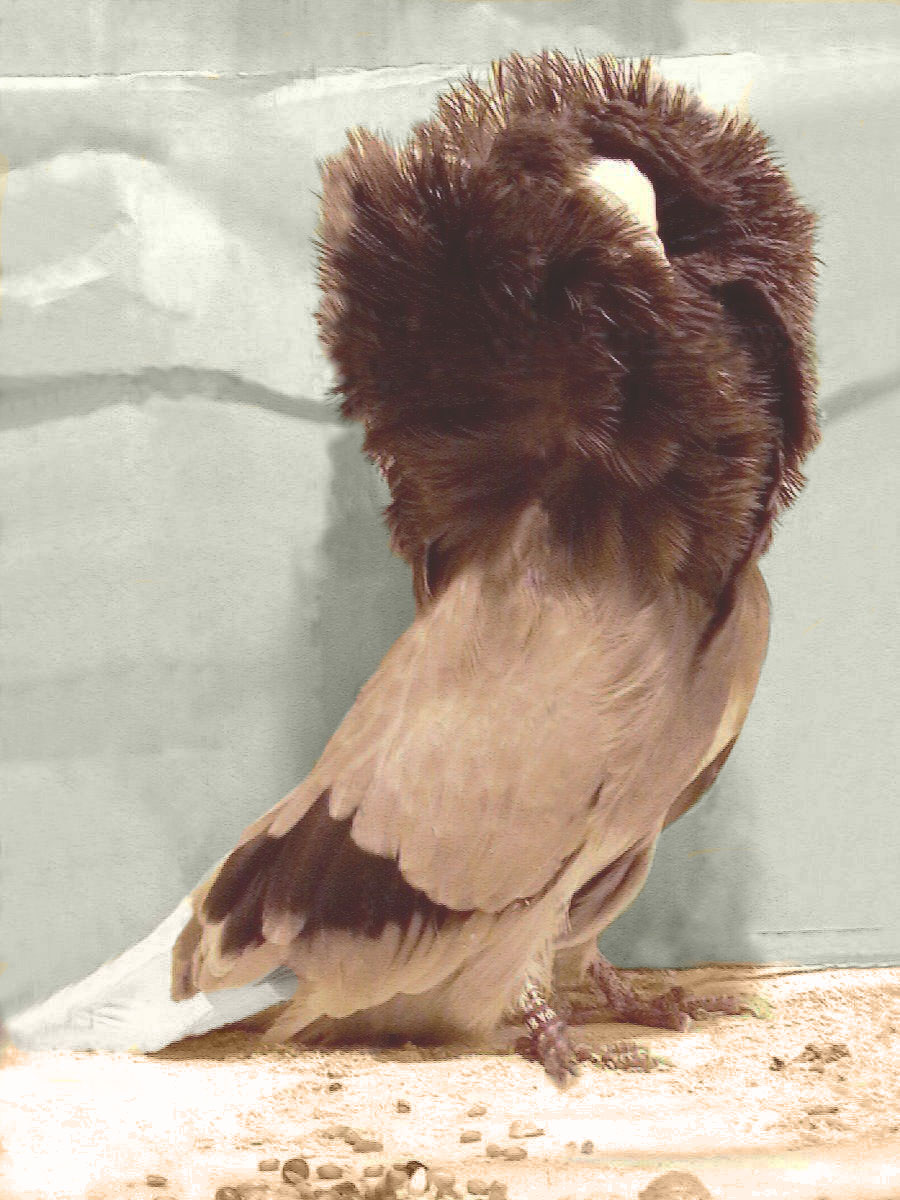
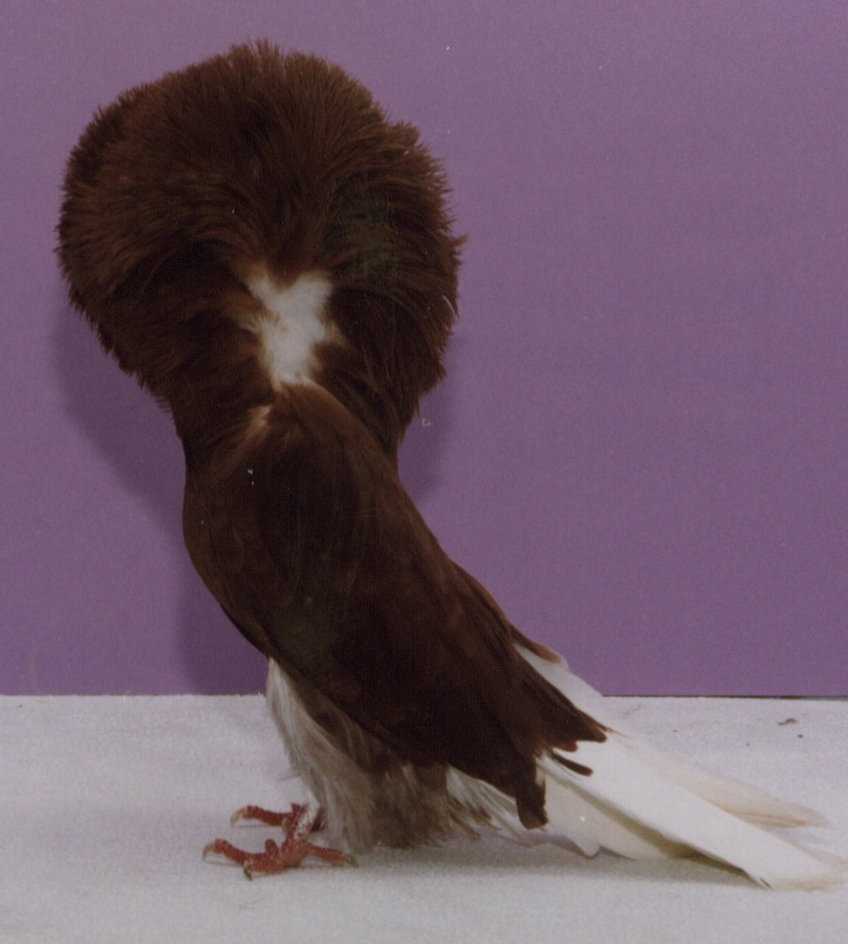
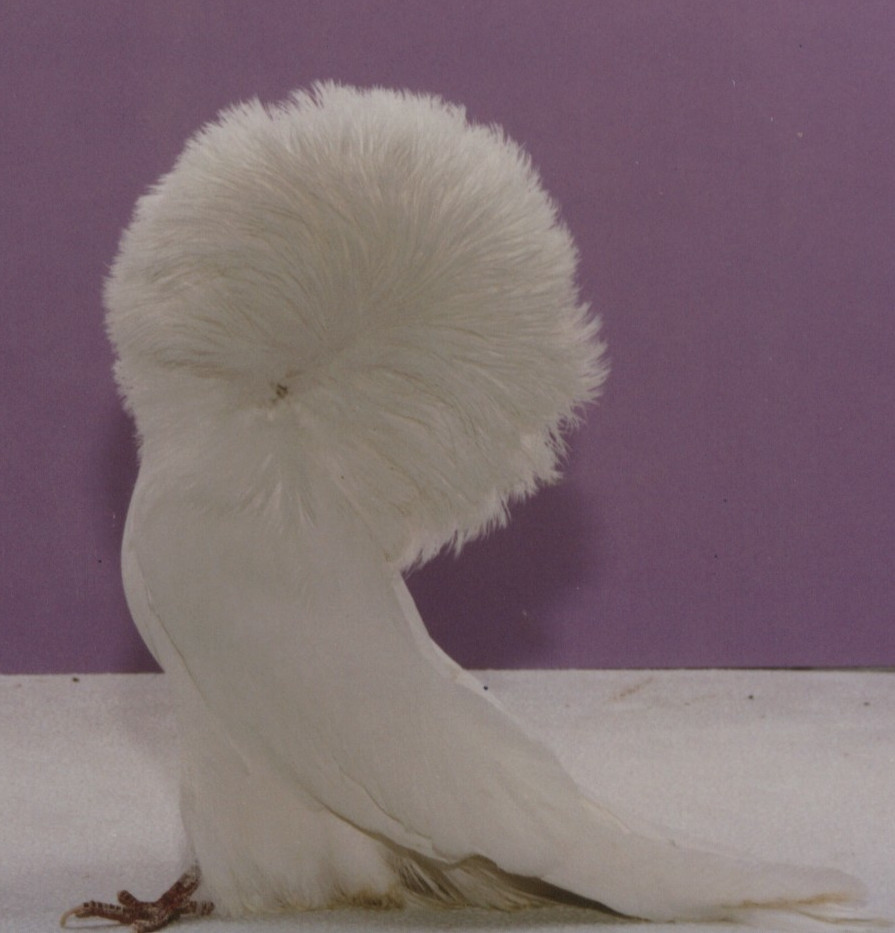
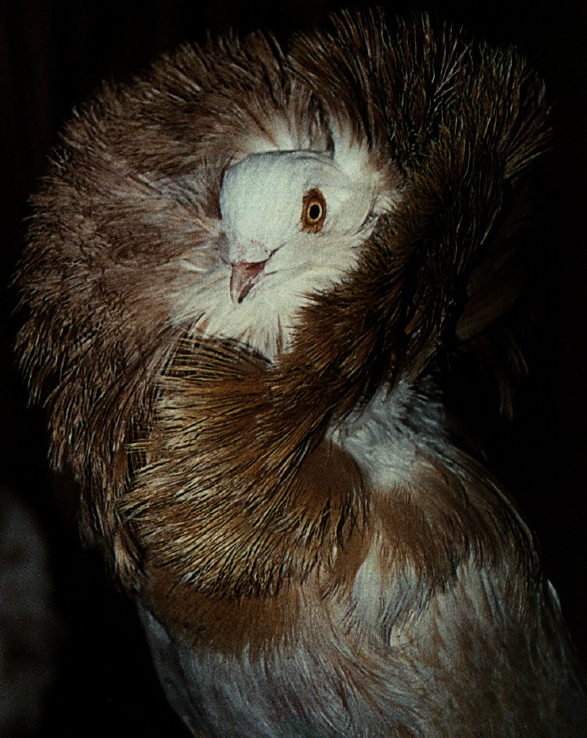
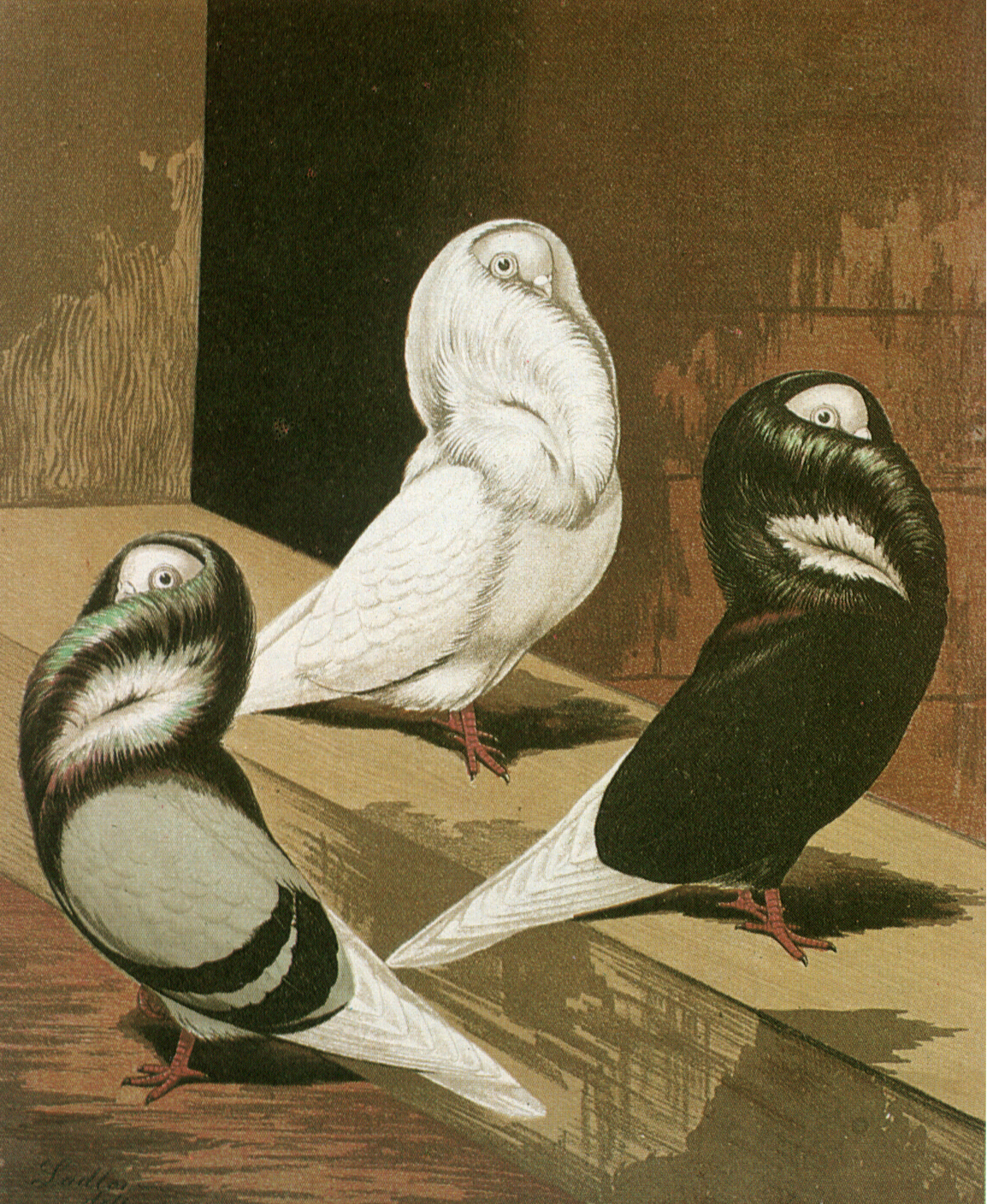
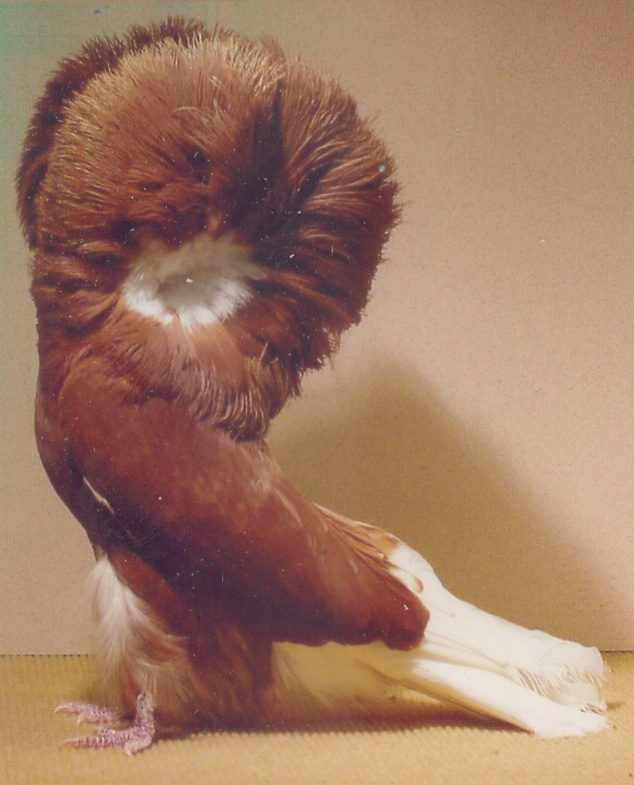
The most remarkable feature of the Jacobin is its extremely ornate feather adornment starting at the base of the neck and forming a chain going beyond the top of the head. Viewed from the side, the feathers grow out in all directions from the neck, forming what is called a rosette. This chain and rosette compose the hood that completely engulfs the top and sides of the head, covering the bird's face from every angle except directly from the front. The more pronounced the hood and chain, the higher the quality of the specimen. As noted in the National Pigeon Association standard, the hood, chain, and mane are the main show constituents of the breed. The Jacobin is, essentially, a dramatic bird of feather and carriage. The hood is long, coming well forward, thick and even at the edge, fitting as close to the head as possible. The wings and tail feathers are very long for a pigeon of its size. They are bred in a remarkable number of colors, including white, black, blue, silver, red, yellow, splash, and many other non-standard colors. The colored varieties' tail, rump, primary flights, and cap remain pure white. The white cap extends from the beak, in a line, back to the hood. The primary flights are the 10 most outward flight feathers in the wings. Because of their fancy look, Jacobins had for a long time been regarded as delicate pigeons that should be bred only by experienced fanciers. This really is not true. The breed is hardy and regarded as a good parent, even though they eat comparatively little. However, because of their hoods, Jacobins cannot see very well to the sides and fly very little, preferring to stay on the floor. The breed is best kept to itself in a smaller cote, away from other breeds, but this is no handicap. Viewing a few pair of Jacobins, strutting their stuff about the floor with their large feather hoods flowing through the air, is a sight indeed. They are often compared to, and sometimes noted as being related to, the Old Dutch Capuchine. But don’t let any Jacobin or Dutch Capuchine breeders hear this heresy. |
|||
Gallery |
|||
Standard |
1984 | 1993 | 2000 |
 |
|
|
|