| Structure Breeds: The Frillback |
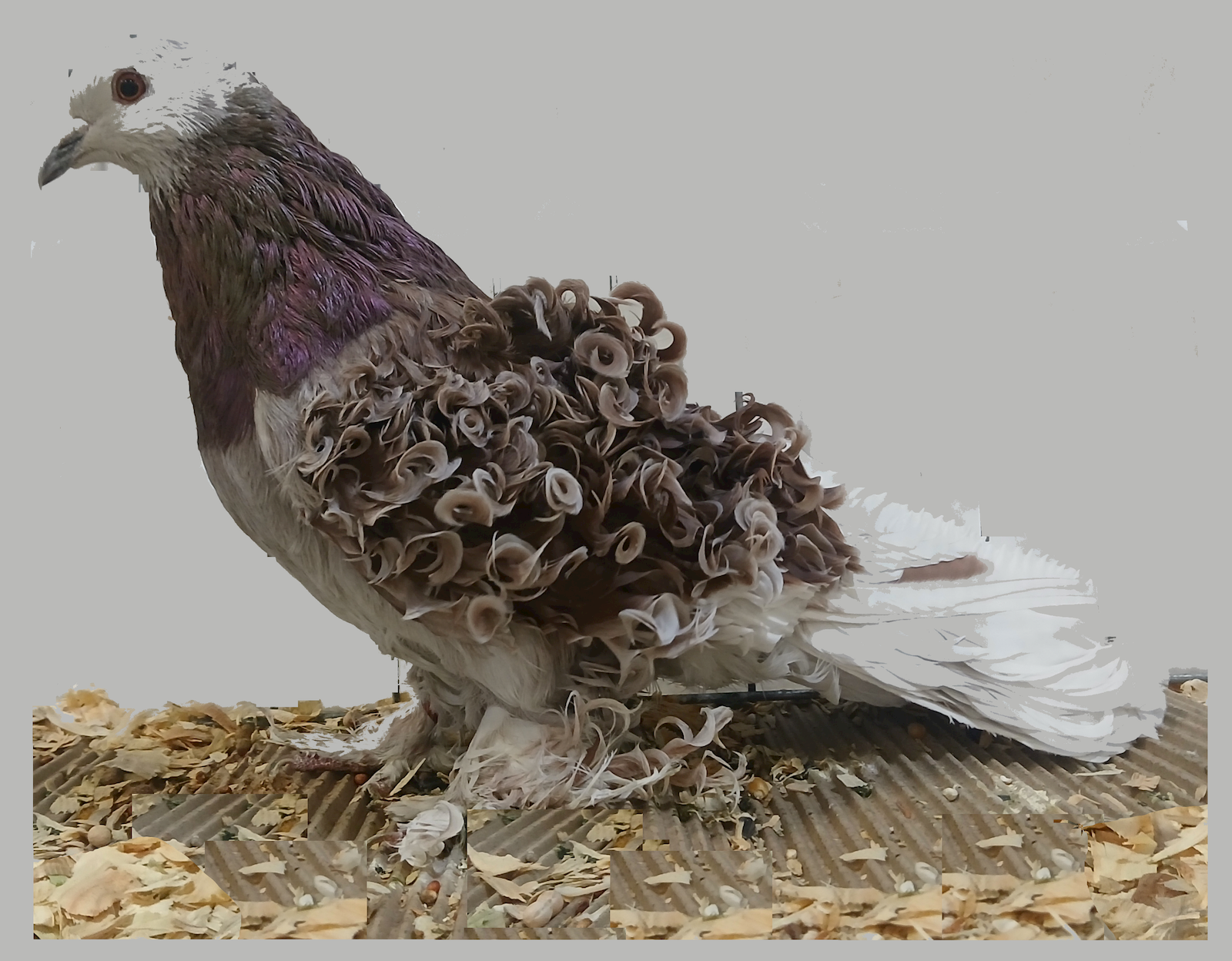
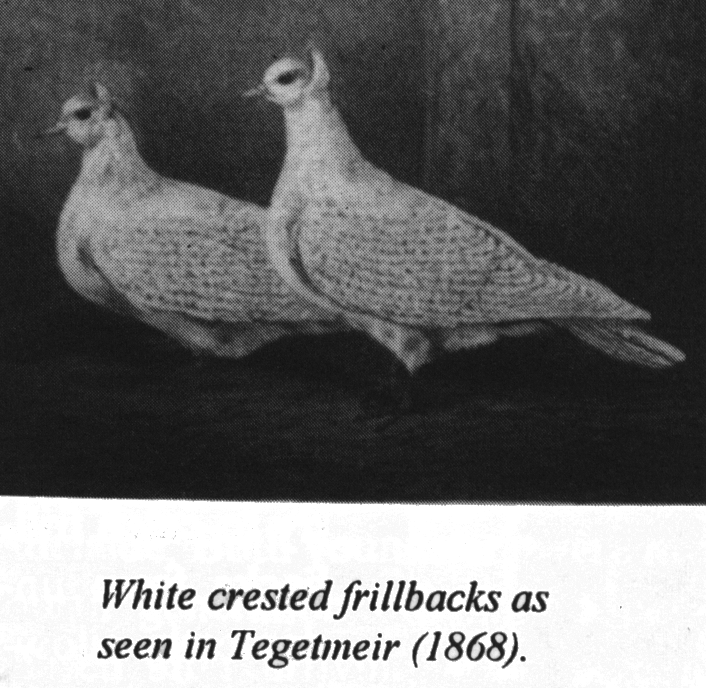
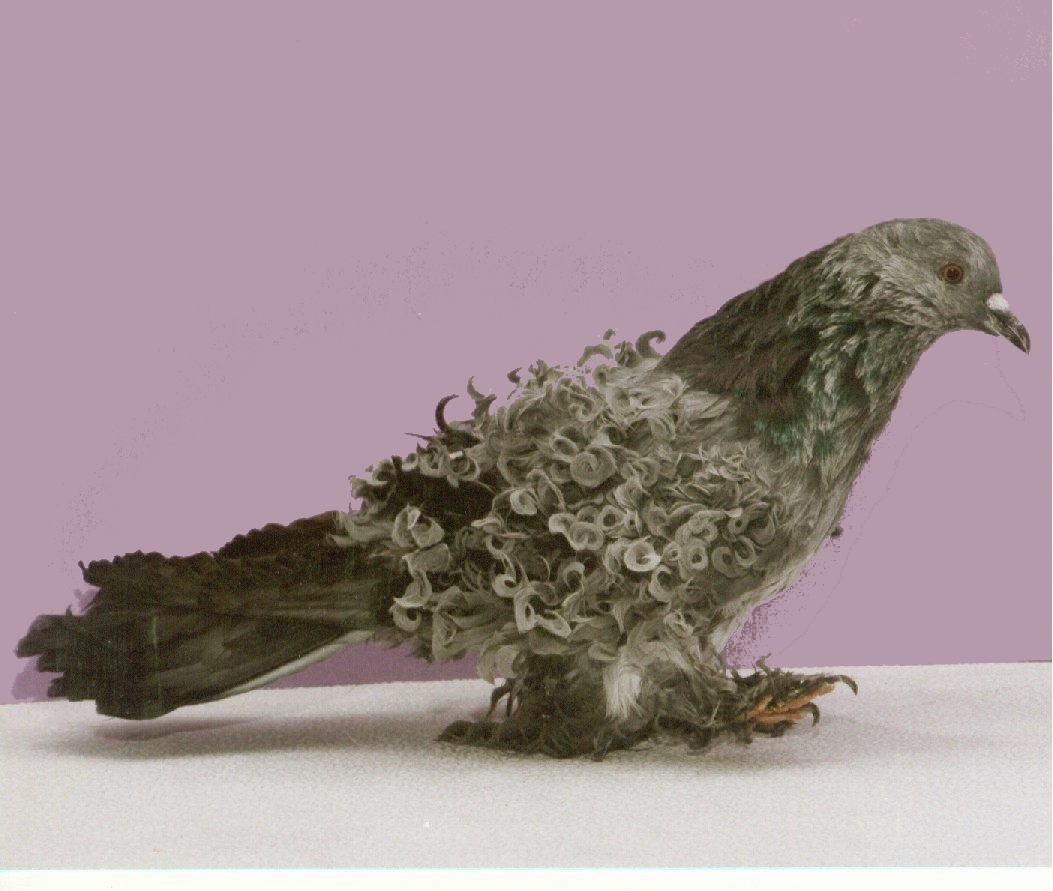
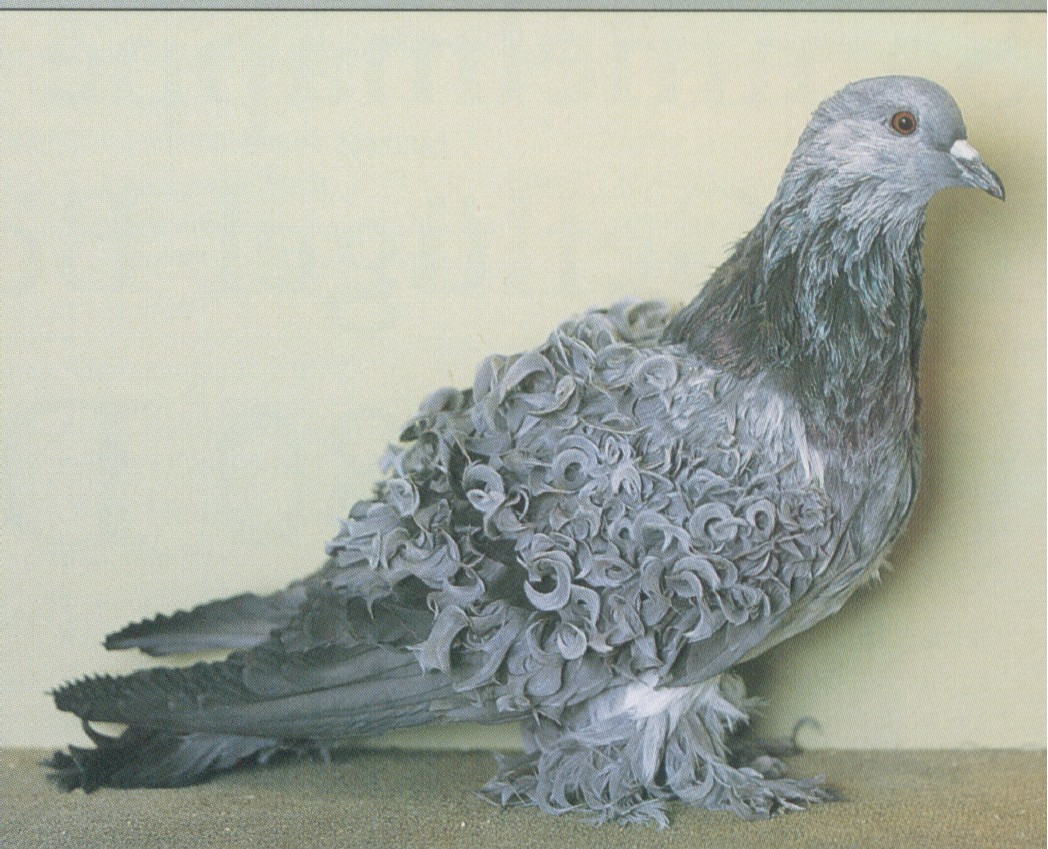
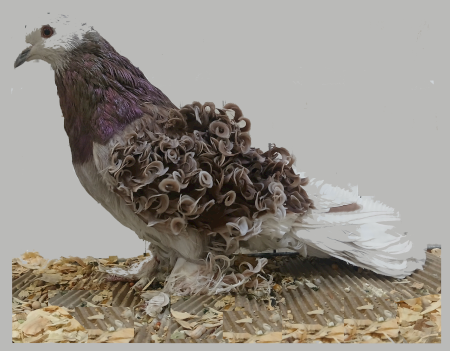
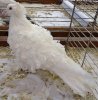
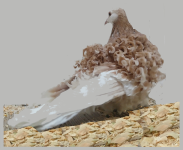
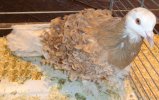
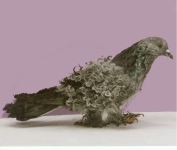
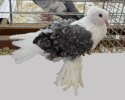
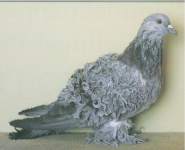
The general shape is that of a field-pigeon or feral-type, being rather long and slender with a rather long and thin beak. The eye color is in the orange to red range, with a narrow pale eye cere. The wings are rather long, laying upon and almost reaching the end of the tail. The legs are short and can be feathered or plain. Most Frillbacks are plain headed, but crests are found on whites and blacks. The crest forms a shell around the head, with a small rosettes at each end.(2) While Frillbacks come in a variety of colors, the colors are not intense, and require more breeders' attention. (9)
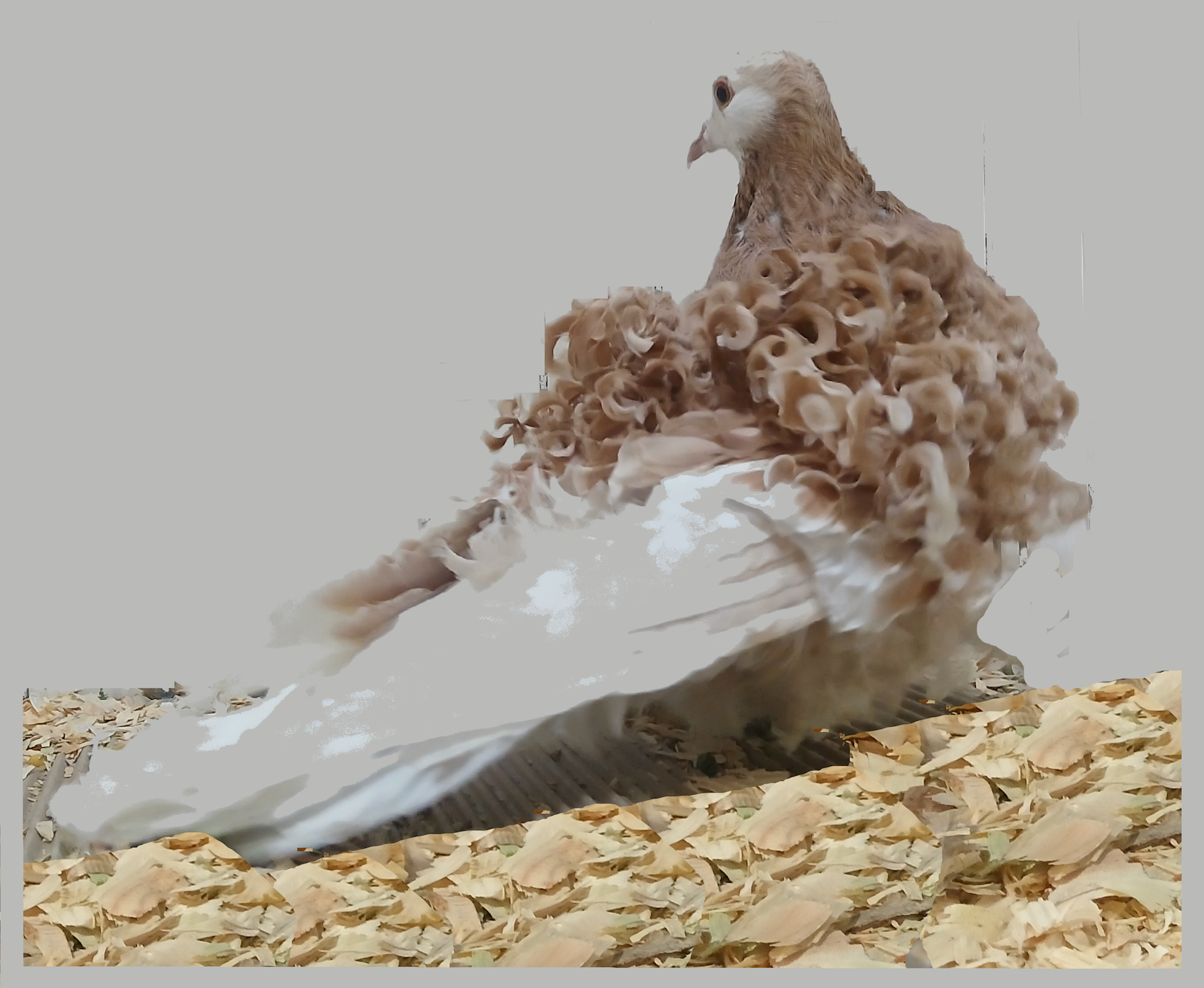
But it is the curling of the feathers that make this breed truly unique. The curls stand out in ringlets that dance when brushed or blown upon. When wet, the curls are lost, appearing as rather unsightly strings. But when they dry, they look even better giving the appearance of a soft velvet.(5) Breeders of the last 100 years have made much progress in this, the breed's outstanding feature. The curls are much more profuse, extending more thickly and longer over the wing shields than the examples found before 1900.(6) The best description of the feather curl is provided by Gary Young, in his APJ article of 1981.(10) |
 |
History
The exact origin of the breed is not definitely known. It is an ancient breed that reaches far back in history and is said to have originated in several different regions. It is generally conceded that the breed arrived from the Orient via the ports of Palestine, Arabia, Syria and Persia.(3) They were known in England as early as 1735, and are briefly mentioned In John Moore's Treatise on Domestic Pigeons.(4) They arrived in the U.S. around 1900.(8) Historically they have generally been colored black or white,(7) from the Netherlands and France, while the blue and red varieties were developed in Austria-Hungary. (9)
The breed is widely distributed around the world in America, Europe and regions further east from whence it came.
|
Gallery |
 |
 |
 |
 |
 |
 |
 |
 |
Standard |
year 2000 |
1910 |
|
 |
|
|
References |
Available for download |
| 1 |
C.A..M. Spruijt, De StruuctureDuiven 1931, N.V. Drukkerij, Kock & Knuttel, Gouda |
 |
| 2 |
Tally Mezzanatto, Purebred Pigeon , Nov-Dec. 1921, Frillbacks then and now |
|
| 3 |
The Frillback, American Pigeon Journal, 1948, H.P. Macklin |
|
| 4 |
Treatise On Domestic Pigeons, John More 1765 |
|
| 5 |
American Pigeon Journal, July 1955 , H.P. Macklin, New importations most interesting |
|
| 6 |
American Pigeon Journal, April 1982, From Frizzle to Frillback, Guenter Wenzel |
|
| 7 |
Lewis Wright , The Practical Pigeon Keeper, 1879 |
|
| 8 |
The Pigeon Standard, C. E. Twombly, 1900 |
|
| 9 |
American Pigeon Journal, June 1984, The Development and Breeding of the Frillback. Werner Pfortuer |
|
| 10 |
Gary Young, American Pigeon Journal, January 1981,Frillback Feather Description |
|
| |
|
|
|